
In a recent analysis for the Los Angeles Review of Books, Ivan Kreilkamp explores the distinctively unsettling humor of New Yorker cartoonist Edward Steed. Reviewing Steed’s 2024 collection, Forces of Nature: A Book of Drawings, Kreilkamp argues that the artist’s work transcends traditional gag comics, operating instead within the realm of “posthuman comedy.”
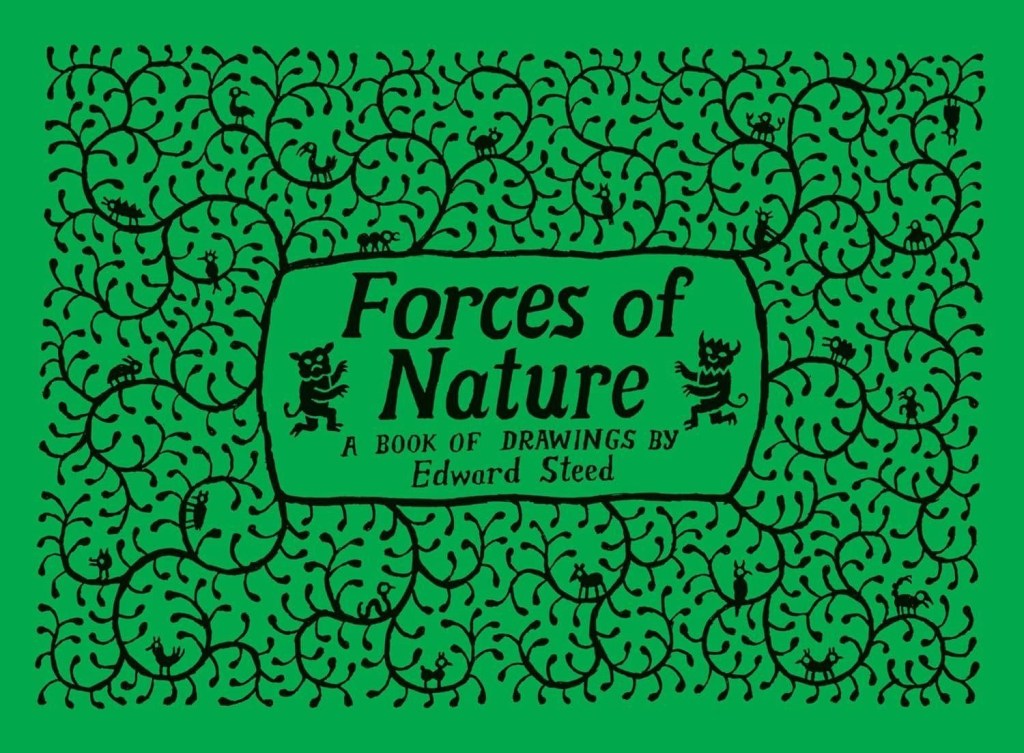
Drawing on literary scholar Mark McGurl’s definition, the review suggests Steed’s cartoons “blast through ordinary perception” by shifting scales and centering nonhuman perspectives. While Steed’s minimalist style invites comparisons to Charles Addams’s darkness or Roz Chast’s anxiety, Kreilkamp identifies a deeper, almost Lovecraftian existentialism. The cartoons frequently feature “homunculi”—blob-like, skeletal-less figures that render humanity fragile and grotesque.
Key examples highlight this shift in perspective. Kreilkamp points to a cartoon where a tree paints a wooden stool as a memento mori rather than the human skull nearby, and another where God, bored and depressed, flicks a picnicker off the horizon. The review also notes Steed’s fascination with scale, such as a homebuyer casually noting that a giant occupying the upper floor “explains the penis we saw downstairs.”
Ultimately, Kreilkamp posits that Steed’s genius lies in his ability to make the “inhumanly large and long” funny. By mocking human self-importance against the backdrop of a vast, indifferent universe, Steed offers a comedic vision that is as philosophically profound as it is hilarious.
 Posthumanism.Today
Leave a comment